
Leading Reframed

Leading Insights for a Changing World

The Work Of UNDERSTANDING Edition #1 — September 2026

Feature Article · Examine It Deeply

Understanding Reframed

Leadership Begins Before Action
Leadership begins with the intentional and disciplined expansion of understanding.
The implication is practical as much as philosophical: before leaders communicate, decide, coach,
influence, or guide change, they first interpret what is happening. Expanding understanding means
deliberately improving that interpretation before action gives it visible form.
Leadership has understandably concentrated on action. Actions are observable. We can watch
leaders communicate, make decisions, resolve conflict, coach employees, or guide organizations
through change. These behaviors leave evidence that can be studied, measured, refined, and
taught. It is only natural that leadership research has devoted much of its attention to what leaders
do.
Yet every action has a beginning that cannot be observed.
Long before a leader speaks, an internal conversation has already begun: information is gathered,
prior experience is recalled, assumptions are tested, priorities are weighed, and meaning is
constructed. Whether this process lasts seconds or weeks, it shapes the leadership action that
follows.


Read More
From the Editor · Why This Matters

From the Editor

The pace of change continues to accelerate. Organizations, communities, and societies are
navigating increasing complexity, uncertainty, and competing perspectives. As our world evolves,
leaders are continually called upon to interpret new realities, make difficult decisions, and guide
others through change.
Those demands require more than experience alone. They require an understanding that
continues to evolve.
Leading Reframed is founded on a simple belief: understanding is never complete. Every leader
interprets the world through the lens of current experience, knowledge, and perspective. Those
lenses are valuable, but they are never complete. Leadership requires a continual commitment to
expanding our understanding through intentional reframing.
Reframing is the intentional practice of expanding our understanding by examining familiar ideas from new perspectives. It does not ask us to abandon what we already know. Instead, it invites us to build upon it. The purpose of reframing is not to replace our understanding—it is to expand it, with intention. That simple idea shapes every issue of this journal. Whether exploring communication, influence, planning, coaching, organizational change, first-line leadership, or another leadership challenge, our purpose remains the same: to encourage thoughtful reflection, broaden perspective, and help leaders continually expand their understanding of the realities they are called to influence.

Read More
Leadership Lessons from the Movies · See It Through Story

Arrival: Understanding Before Action

Arrival (2016) Directed by Denis Villeneuve | Starring Amy Adams, Jeremy Renner, and Forest Whitaker.

Arrival is a 2016 science fiction film directed by Denis Villeneuve and starring Amy Adams, Jeremy Renner, and Forest Whitaker. The film follows Dr. Louise Banks, a linguist asked to help the world communicate with mysterious visitors whose language, motives, and meaning are unknown.

At first glance, Arrival appears to be a story about aliens. However, its deeper leadership lesson is about how leaders interpret meaning when the facts are incomplete, emotions are high, and the pressure to act is immediate.

Twelve spacecraft have appeared around the world. No one knows why they are there or what their occupants want. Governments want answers. Militaries prepare for the possibility of conflict. Political leaders face frightened populations. Every hour without an explanation increases the pressure to make a conclusion.

Read More

Also In This Issue

Coach's Corner · Reflect on Yourself

Stay Curious About the Leader You’re Becoming

Leadership development often focuses on becoming better at something: communicating more clearly, making stronger decisions, building trust, managing conflict, or navigating change. We learn models, develop skills, gain experience, and gradually form ideas about what good
leadership looks like. Along the way, however, we can also become increasingly certain about who
we are as leaders.
Experience gives us good reason for some of that confidence. We learn what works. We recognize
situations we have encountered before. We develop instincts that allow us to respond without
having to reconsider every decision from the beginning. But experience can also make it easier to
stop being curious about ourselves. What began as a deliberate leadership choice can eventually
become simply “the way I lead.”
Curiosity offers another way to think about leadership development. It also has an important relationship with understanding. Curiosity keeps understanding open. When we remain curious, we leave room for something we have not yet noticed, considered, or learned. That matters when we are trying to understand an organization or another person, but it matters just as much when the subject we are trying to understand is ourselves.

Read More
The Wider Lens · See It Differently

Read the Scene Before You Solve the Crime

A detective arrives at a crime scene after the story has already begun. Something happened there. People acted, decisions were made, and events unfolded in a particular order. Some things may have been moved while others were left untouched. Someone may be telling the truth, someone may be lying, and someone else may be completely sincere and still be wrong about what they saw. The detective wasn’t there, yet the detective is expected to determine what happened. That requires more than finding evidence. It requires developing an understanding of the scene. The temptation, of course, is to begin solving the crime immediately. A broken window suggests an entry point. A missing object suggests a motive. A witness identifies someone who seemed suspicious. One fact connects with another, and almost immediately a possible explanation begins to form. That isn’t necessarily a problem. Detectives need theories because without interpretation, evidence remains a collection of disconnected facts. The danger comes when the detective begins seeing the scene through the theory rather than allowing the scene to shape the theory.

Read More
Management in Practice · Put It to Work

Strategic Leadership as Understanding

For more than 100 years, managers have relied on four basic duties: planning, organizing, leading, and controlling. These ideas emerged when businesses were stable and predictable, so managers could assume markets, company structures, and performance systems would largely remain the same. Today’s workplaces are totally different. They face constant change, uncertainty, and complexity. As Esenyel states, modern leaders cannot keep up with fast digital advances and diverse teams¹. Old management functions are still useful, but old ways of viewing them no longer fit today’s organizational reality.

Read More
Leadership Lessons from the Movies · See It Through Story

Arrival: Understanding Before Action

Arrival (2016) Directed by Denis Villeneuve | Starring Amy Adams, Jeremy Renner, and Forest Whitaker.

Arrival is a 2016 science fiction film directed by Denis Villeneuve and starring Amy Adams, Jeremy Renner, and Forest Whitaker. The film follows Dr. Louise Banks, a linguist asked to help the world communicate with mysterious visitors whose language, motives, and meaning are unknown.

At first glance, Arrival appears to be a story about aliens. However, its deeper leadership lesson is about how leaders interpret meaning when the facts are incomplete, emotions are high, and the pressure to act is immediate.

Twelve spacecraft have appeared around the world. No one knows why they are there or what their occupants want. Governments want answers. Militaries prepare for the possibility of conflict. Political leaders face frightened populations. Every hour without an explanation increases the pressure to make a conclusion.

Read More
Coach's Corner · Reflect on Yourself

Stay Curious About the Leader You’re Becoming

Leadership development often focuses on becoming better at something: communicating more clearly, making stronger decisions, building trust, managing conflict, or navigating change. We learn models, develop skills, gain experience, and gradually form ideas about what good
leadership looks like. Along the way, however, we can also become increasingly certain about who
we are as leaders.
Experience gives us good reason for some of that confidence. We learn what works. We recognize
situations we have encountered before. We develop instincts that allow us to respond without
having to reconsider every decision from the beginning. But experience can also make it easier to
stop being curious about ourselves. What began as a deliberate leadership choice can eventually
become simply “the way I lead.”
Curiosity offers another way to think about leadership development. It also has an important relationship with understanding. Curiosity keeps understanding open. When we remain curious, we leave room for something we have not yet noticed, considered, or learned. That matters when we are trying to understand an organization or another person, but it matters just as much when the subject we are trying to understand is ourselves.

Read More

From the Editor

Why This Matters

— Dr. Paul Dannar, Editor

Dr. Paul Dannar is Editor and Co-Founder of Leading Reframed. He holds a Doctor of Strategic Leadership from Regent University and brings experience across government, military, academic, and organizational settings.

Feature Article

Examine It Deeply

Coaches’ Corner

Reflect on Yourself

The Question That Ends More Meetings Than It Starts

A simple coaching prompt that stops status updates from eating your calendar — and helps readers connect the issue’s ideas to their own leadership practice.

Coaching & Reflection · 5 min read

Management in Practice

Put It to Work

The 15-Minute Skip-Level That Changed My Org

A mid-size manufacturer’s quiet experiment in listening past the org chart — planning, communication, and the everyday work of getting things done.

Management in Practice · 6 min read

Leadership Lessons from the Movies

See It Through Story

What "Apollo 13" Teaches About Leading Under Pressure

Gene Kranz never raised his voice. Here’s what that actually cost him — and what it can teach us about leading under pressure.

Leadership Lessons from the Movies · 7 min read

The Wider Lens

See It Differently

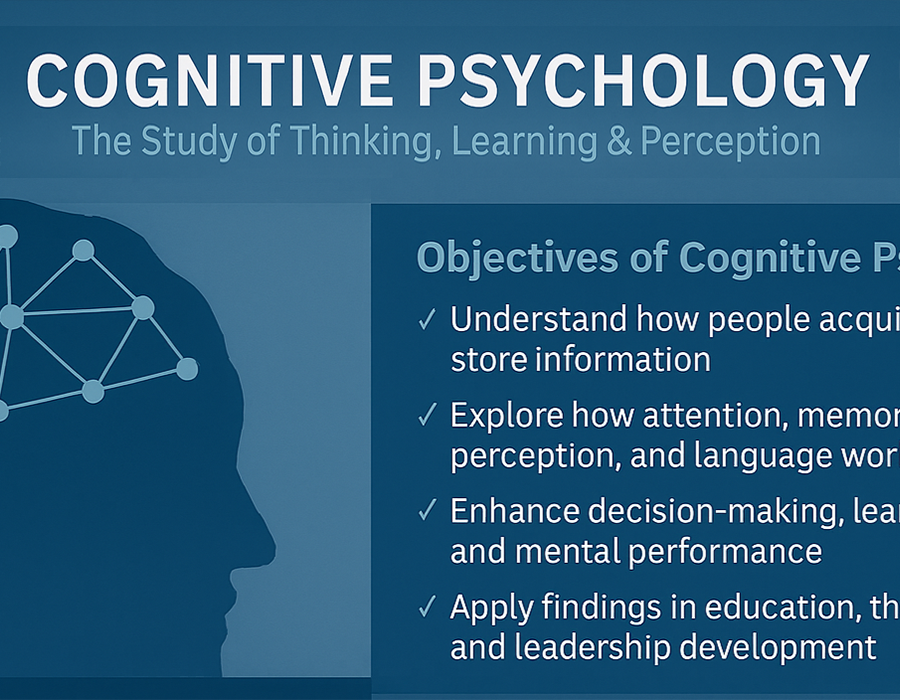
What Cognitive Psychology Can Teach Leaders About Assumptions

A signature reframing section that looks outside conventional leadership thinking — this issue, through the lens of cognitive psychology and interpretation.

The Wider Lens · 8 min read

Conversations

Perspectives From People Who Help Us See Leadership Differently

A Conversation With a First-Time CEO, One Year In

Conversations is an occasional feature — it appears only when the right subject-matter expert, practitioner, or author can add a perspective worth featuring.

Conversations · Occasional Feature

Leading Reframed

Leading Insights for a Changing World

Explore

Get Involved

Leading Reframed

Leading Insights for a Changing World

Get Involved

Connect

Get the Issue in Your Inbox

One email when a new issue publishes. No spam, no daily noise — just the monthly issue and the occasional important update.

© 2026 Leading Reframed

Powered By Techformia

Leading Reframed

Leading Insights for a Changing World

Get Involved

Connect

Get the Issue in Your Inbox

One email when a new issue publishes. No spam, no daily noise — just the monthly issue and the occasional important update.

© 2026 Leading Reframed

Powered By Techformia